

People sometimes ask me why I’m so passionate about working with Community Action Agencies (CAPs) and nonprofits. Some of them don’t quite get it. They see limited budgets, funding challenges, and complicated processes, so they wonder why I would focus so much of my career on organizations with fewer resources than private businesses.
My answer usually surprises them. I know firsthand how much these organizations matter, because my family was once one of the families that desperately needed help. And I’ll never forget what happened when someone finally reached out to us.
Growing Up Poor on a Minnesota Farm
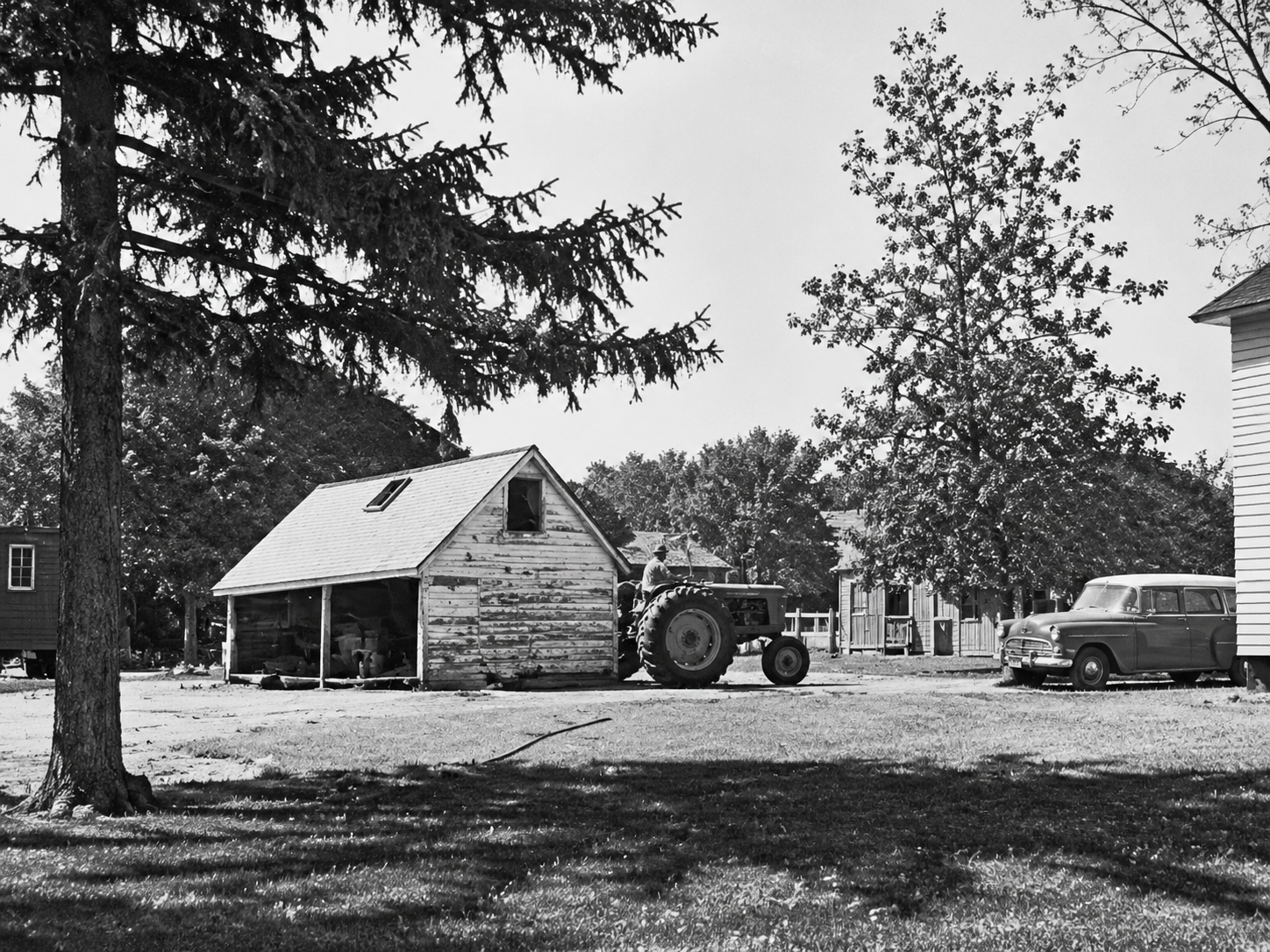 My father used to say, “We were the poor people that poor people talked about.” He wasn’t exaggerating.
When I was about nine, Dad went into the Veterans Hospital for back surgery. He had several spinal fusion surgeries and ended up spending approximately two years there. That left my mother and me to keep our small southern Minnesota farm running.
Our days started at 5 a.m. We milked the cows, did the chores, and got everything ready before I headed off to school. Then, when I got home, we started all over again with the animals and the evening chores. It was hard work for a young boy, but it simply needed to be done.
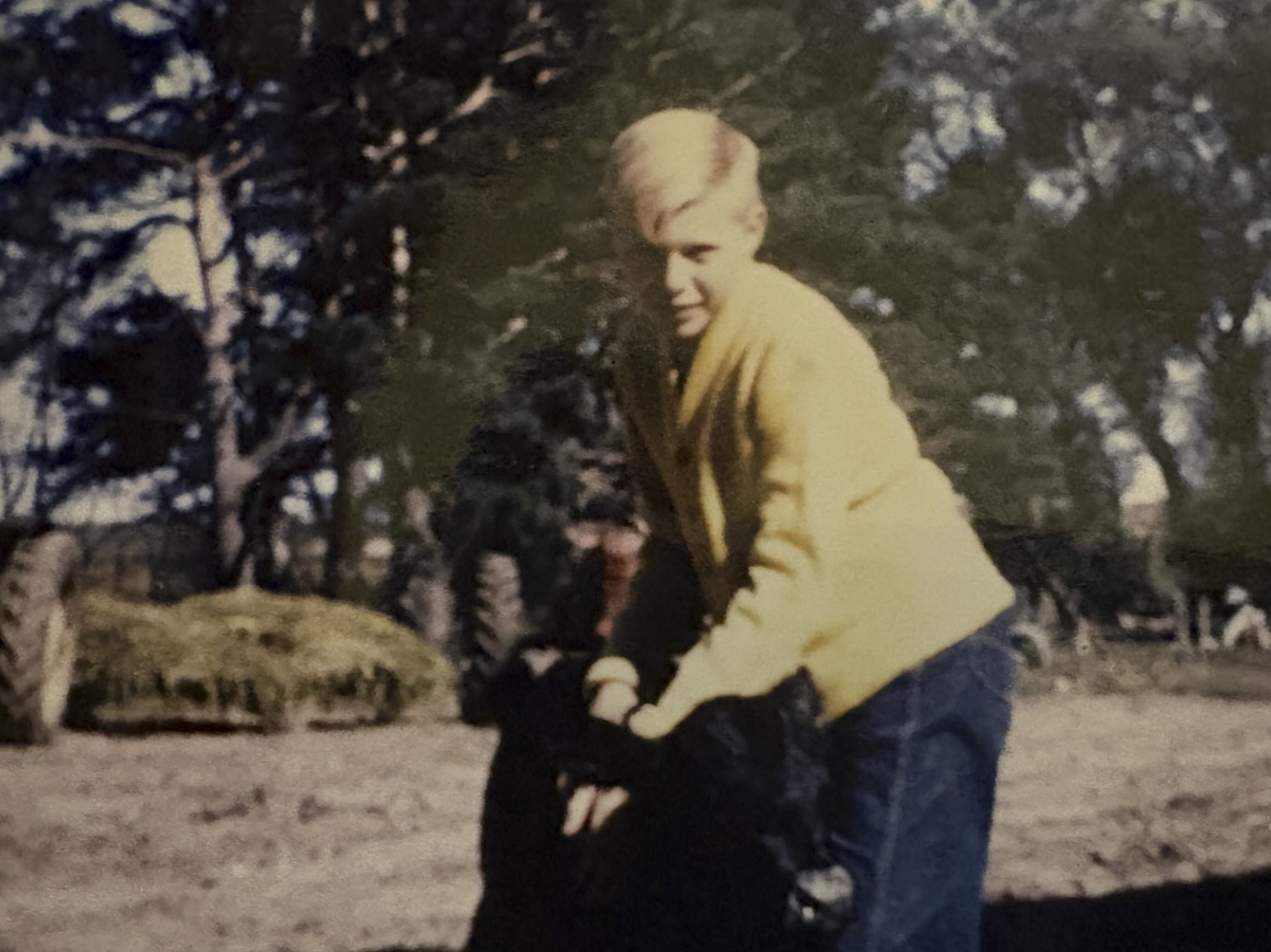 Money was even tighter. Because Dad was in the hospital, we had to rent out much of our farmland and share the profits instead of keeping the full income. That meant a lot less coming in, so we learned to live without things most families took for granted.
We didn’t have birthday presents, and Christmas presents weren’t something we could count on. We ate a lot of oatmeal. Mom baked our bread, and thankfully we had milk from the cows and eggs from the chickens. Our clothes came from rummage sales because new ones were a luxury we couldn’t afford.
We never thought of ourselves as victims. We just did what we had to do to get by. Still, there were times when we really needed help.
The Day My Mother Asked for Help
One day, my mother went to the county welfare office to see whether any assistance was available for our family. She came home humiliated. Instead of compassion and dignity, she met suspicion. Someone suggested she was just another farmer trying to cash in.
Think about that for a moment. Her husband had been hospitalized for nearly two years, and she was keeping a farm running, raising her children, and putting food on the table. Yet when she finally worked up the courage to ask for help, the office treated her like someone looking for a handout she didn’t deserve.
She came home with a pair of boots, a large jar of peanut butter, some flour, and a feeling of humiliation that stayed with her. She told us she would never go back. We would do without before she’d put herself through that again, and that’s exactly what we did.
That experience taught me something I’ve carried my entire life. People who need help don’t need to be made to feel small. They need dignity and respect.
The Christmas That Changed Everything
One Christmas from my childhood stands out. We had no money for presents, no Christmas tree, and no special dinner. It was going to be another day of chores and getting by.
Then some people in a small southern Minnesota town heard about our situation, and they decided to give our family a Christmas. How they did it is what makes the story so remarkable.
Christmas was already very close, so there wasn’t time to organize a fundraiser or shop for everything. Instead, these families took presents from under their own trees, gifts they had bought for their own children, and gave them to us. They also gathered food they had set aside for their own Christmas dinners. Someone gave us a turkey. Others brought potatoes, stuffing ingredients, and all the fixings. I sometimes wonder whether one of those families went without a turkey dinner that year because they gave theirs to us.
These weren’t people giving away things they didn’t need. They sacrificed something of their own so our family could have a Christmas.
A Knock at the Front Door
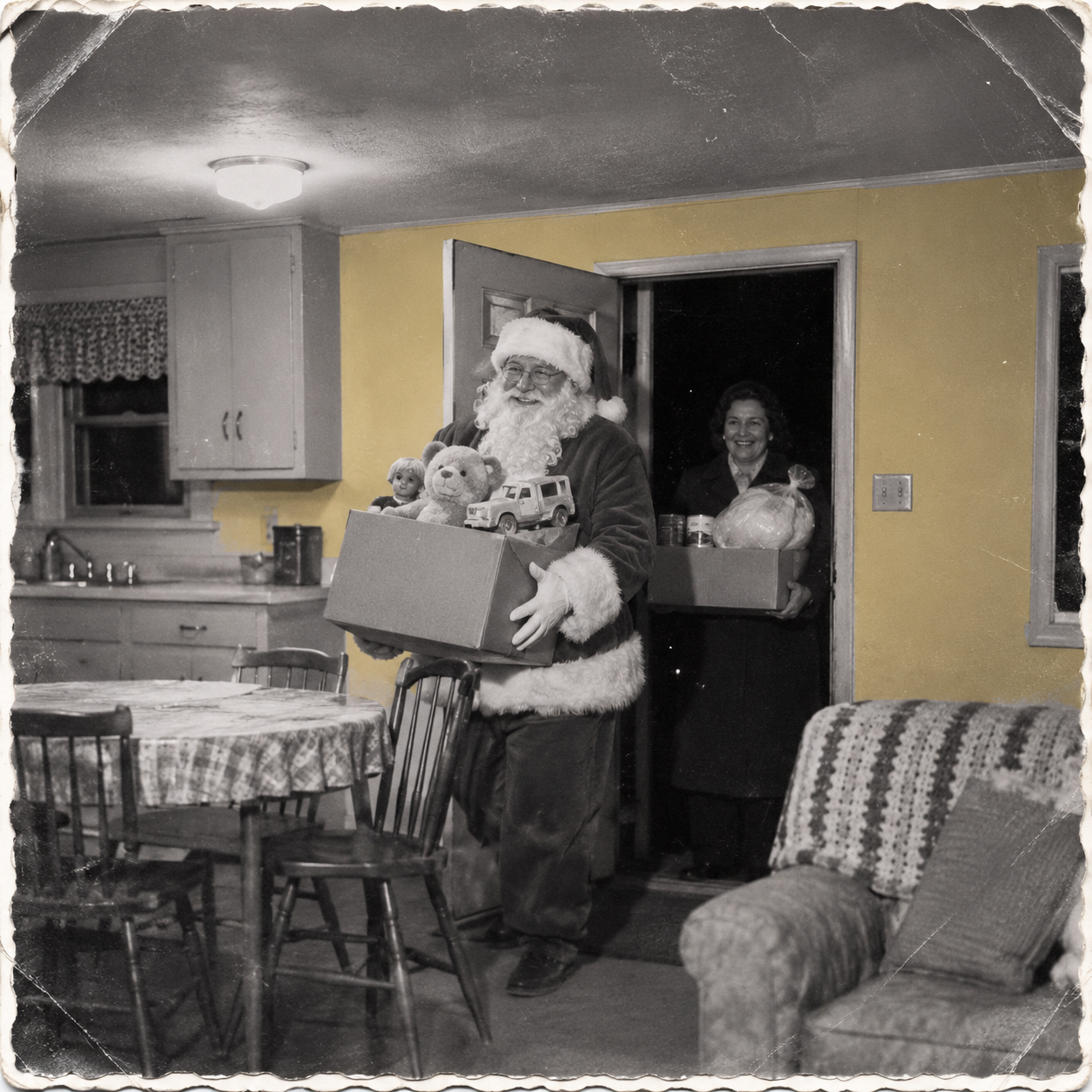 On Christmas Eve, we had finished our chores and were sitting at home when someone knocked at the front door. That was unusual. On a farm, people normally came to the other door, and we rarely used the front entrance. Mom went to answer it, and there stood Santa Claus.
Someone from town had dressed up as Santa and brought us Christmas. He carried a big box filled with clothes, toys, and food for a wonderful dinner. They even brought a Christmas tree and helped us set it up.
I remember the excitement as the gifts went under the tree. Some of the younger children received toys they never could have imagined owning. One got a brand-new Tonka truck. If you grew up back then, you know what a big deal that was, because those trucks were expensive and special. We had very few toys growing up, and certainly none that new.
That evening, we opened presents around our very own Christmas tree. For one night, we stopped thinking about the bills, the farm, and everything we didn’t have. We were just children enjoying Christmas, and it was wonderful.
Even now, I can hardly tell this story without tearing up. The presents and the food mattered, but what mattered most was knowing that someone cared enough to sacrifice something of their own for us. Those people probably had no idea how much their kindness meant. But I can tell you this: they changed our lives.
That Christmas Changed How I Wanted to Live
As I grew older and started a family of my own, our finances improved. We could afford Christmas presents, a nice dinner, and all the things I had gone without as a child. Even so, that Christmas from my childhood had changed how I saw the holiday.
For many years, our Christmas wasn’t mainly about sitting around the tree opening gifts for ourselves. Instead, we looked for ways to help other people. Sometimes that meant serving meals to homeless people. Other times it meant helping organizations deliver Christmas gifts to families staying in shelters. We wanted to make Christmas special for someone else.
Years earlier, I had made myself a promise. I wanted to be like those people in that small Minnesota town, someone willing to give from what I had, even if it meant doing with a little less myself, so someone else could have something they desperately needed. I wanted to make a difference in someone’s life the way those families had in mine. That desire eventually found its way into my professional life, too.
How I Discovered Community Action Agencies
 Years ago, Steve Long at Lakes and Pines Community Action called me. He was looking for a paperless document management solution. During our conversation, he mentioned that Lakes and Pines was a Community Action Agency, so I asked a simple question: “What’s a Community Action Agency?” I honestly didn’t know.
Steve explained that these agencies exist to help individuals and families with limited incomes get through difficult circumstances. He told me about programs that keep homes warm during Minnesota winters, weatherize houses to reduce energy costs, connect people with education and other services, and help when life gets hard. He also described how agencies work with local food programs and other organizations in their communities.
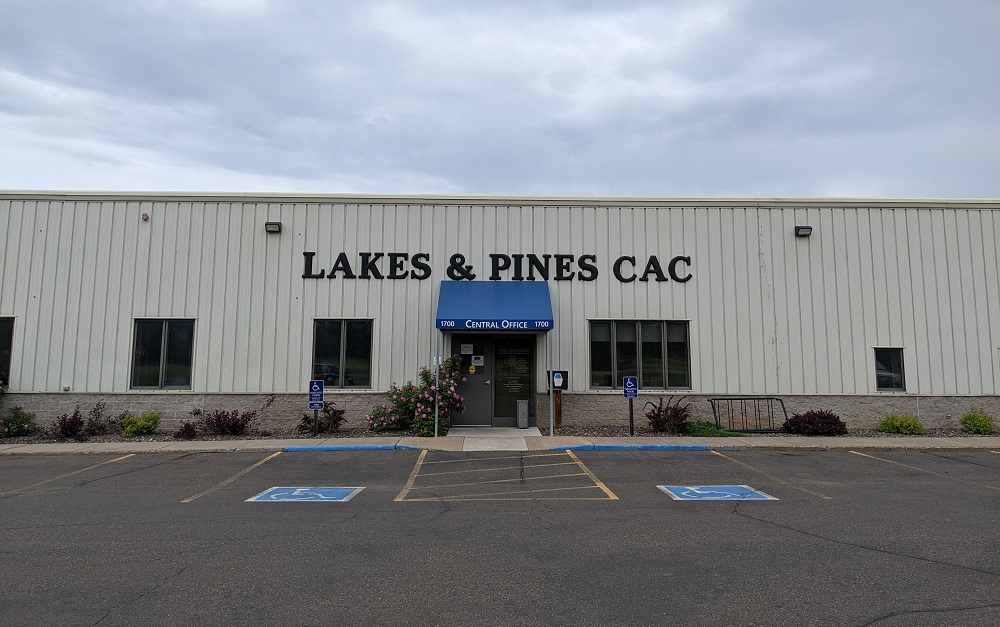 As he talked, something clicked. I thought about my mother walking into that county welfare office and coming home humiliated. I thought about the years we struggled to keep our farm going. And I thought about that Christmas Eve, when people who barely knew us showed up at our door with food, presents, and compassion.
I realized these agencies were doing exactly what I had wanted to be part of since I was a child: helping people when they need it most. That conversation with Steve changed the direction of my work. From then on, I knew I wanted to help organizations like Lakes and Pines.
I Can’t Help Every Family Personally, But I Can Help the People Who Do
For most of my career, I’ve helped organizations use technology to work more efficiently. I’ve worked with large corporations, small businesses, and organizations of every size. Still, working with Community Action Agencies gives that work a different meaning. I know what it’s like to be on the other side of an assistance application. I know what it’s like when a family needs help and doesn’t know where to turn. And I know how much it matters when someone listens, understands, and treats that family with dignity.
That’s why I believe the people working at these agencies have such important jobs. Unfortunately, too many of them spend a big part of their day on paperwork instead of helping people. They enter the same information into multiple systems, chase down missing documents, move applications from desk to desk, and try to keep up with reporting requirements. All of that is necessary to run an agency, but it shouldn’t eat so much time that staff have less opportunity to work directly with the people who need them.
That’s where I can help. When I help an agency process applications faster, eliminate duplicate data entry, and automate routine administrative work, its staff gets more time for families. So to me, this isn’t really about going paperless. It’s about giving people who care about their communities more time and resources to make a difference.
Helping Agencies Do More With the Resources They Have
For more than 25 years, I’ve helped organizations improve how they operate with Laserfiche document management, workflow automation, and, more recently, artificial intelligence. Through Hemingway Solutions, we’ve worked with Community Action Agencies to streamline processes like these:
- Energy Assistance application processing
- Weatherization program management
- Community Services Block Grant (CSBG) administration
- Client intake and document management
- Application review, approvals, and reporting
- Accounts payable and other administrative processes
We’ve seen agencies achieve productivity improvements of 30% or more, and some have reported improvements exceeding 100%. Here’s why that matters. When an agency processes applications in less time, it may be able to help more families without adding staff. Employees who stop entering the same information three or four times can spend more time talking with clients and understanding their needs. A weatherization program that moves households through faster may get families help sooner. And better information helps agency leaders decide how to use limited resources.
To me, those results mean far more than productivity statistics. They mean people getting help, families treated with dignity, and staff members with more time for the work they entered this field to do.
Why This Work Is Personal to Me
Some people describe nonprofits and Community Action Agencies as difficult customers because of limited budgets or complicated funding requirements. I understand those challenges, but I see something different. I see organizations filled with people who chose careers helping others, and employees working hard to stretch limited resources. Mostly, I see struggling families, just as my family once struggled, hoping someone will lend a hand.
They aren’t looking for a handout, a lecture, or a reason to feel ashamed. They just need a helping hand.
I often think about how different my mother’s experience might have been if someone at that county office had listened to her, treated her with respect, and helped her find the resources our family needed. I also think about the people who showed up at our door that Christmas Eve. They didn’t have to help us, and they didn’t have extra money or gifts sitting around. They gave from what they had, and their kindness has shaped my entire life.
More Than a Business
Today, when I work with a Community Action Agency, I’m not just thinking about software, documents, workflows, or artificial intelligence. I’m thinking about the families those systems serve: the single mother trying to keep her heat on during a Minnesota winter, the elderly couple who can’t afford to make their home more energy-efficient, and the parents working hard but still struggling to put food on the table. And I’m thinking about a nine-year-old boy on a farm whose father was in the hospital, whose mother was doing everything she could to keep the family going, and whose Christmas was transformed by the kindness of strangers.
That little boy never forgot what those people did for his family, and neither have I. That’s why I love working with Community Action Agencies and nonprofits. When we help these organizations become more efficient, we do more than improve a business process. We help them change lives.
Somewhere out there, another family like mine needs someone to care enough to help. If the work we do at Hemingway Solutions makes that possible, then I know we’re doing something worthwhile.
Larry Phelps is President of Hemingway Solutions LLC, a Laserfiche Solution Provider specializing in document management, workflow automation, and AI-powered solutions for Community Action Agencies, nonprofits, and businesses. He has spent more than 25 years helping organizations reduce paperwork, streamline processes, and give employees more time to focus on the people they serve. Learn more at www.hemingwaysolutions.net.